


Private equity firms, real estate investment groups, and institutional investors have recently set their sights on the golf industry.
And they're backing that interest with billions of dollars.
Over $5 billion has been invested into golf-related industries by private equity and institutional capital over the past ±18 months with three major investments making headlines.
One investment saw TopGolf selling a 60% stake of its business to private equity group Leonard Green & Partners, with the transaction valuing TopGolf at around $1.1 billion. Another deal involved L.A.B. Golf, a leading innovator in the putter market, selling a majority stake to L Catterton, a private equity firm backed by LVMH, a French conglomerate of high-end brands.
Lastly, Strategic Sports Group invested $1.5 billion in PGA Tour Enterprises, valuing it at just over $12.9 billion.

Why Institutional Capital Is Betting on Golf
But why the recent interest in the golf industry?
Institutional capital and private equity groups are looking for assets with solid fundamentals, consistent performance, and long-term value and growth potential. And the golf industry is hitting all those points.
Golf's Post-Pandemic Boom
Part of the renewed interest can be traced to golf's post-pandemic boom. Participation has reached record levels, rounds played remain high, and younger demographics are entering the game at unprecedented rates.
Investors are seeing an industry with growing demand, expanding revenue opportunities, and multiple ways to monetize that growth.

Broader Capital Market Trends
Beyond participation growth, investors are also being drawn to golf by broader capital market trends. In an environment where institutional investors are seeking assets that provide inflation protection, diversification, and durable consumer demand, golf has emerged as an attractive alternative asset class.
Many golf properties benefit from limited supply, significant barriers to entry, and underlying real estate that is difficult to replicate.
At the same time, consumer spending has increasingly shifted toward experiences rather than goods, benefiting golf courses, resorts, clubs, and entertainment-focused concepts. For investors seeking long-term appreciation combined with operating cash flow, golf offers a unique combination of real estate, hospitality, recreation, and lifestyle investment characteristics.
Golf Courses as Valuable Real Estate Assets
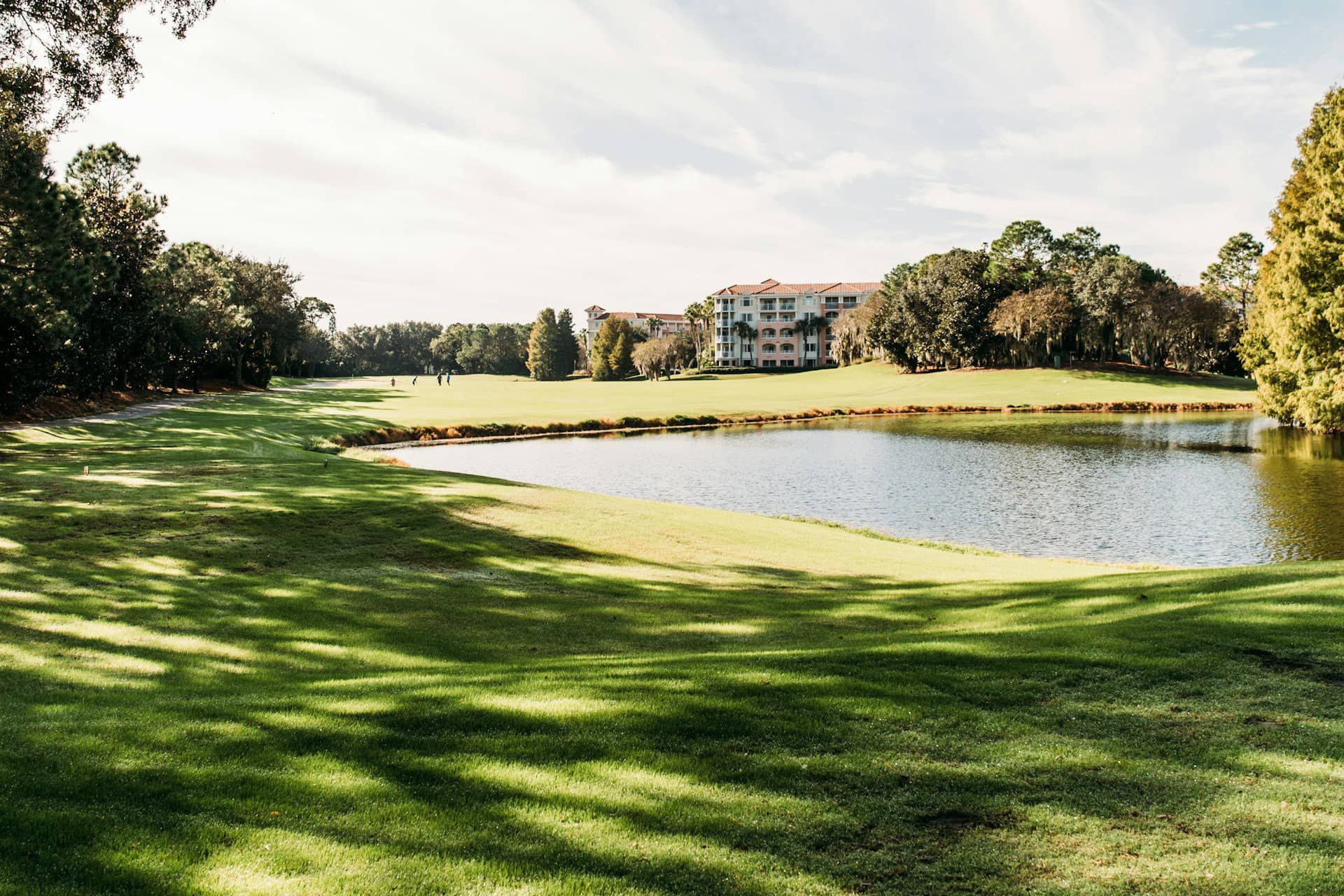
One of the biggest draws for golf courses is that they can be valued in several ways: as operating businesses, income-producing real estate, and sometimes as re-development opportunities.
Operating value is derived from membership dues, green fees, food and beverage operations, events, lodging, and other ancillary revenue streams, while the underlying land often provides significant long-term appreciation potential.
Golf course values increased 38% in 2024, highlighting not only growing interest in the game but also the increasing value of the land that golf courses occupy.
Many courses operate in desirable areas, including tourist destinations or next to nature preserves. Quality golf properties are difficult to replicate. When development rights, zoning restrictions, and environmental regulations come into play, building new commercial properties and real estate can become increasingly difficult.

This makes golf courses, which typically sit on dozens or hundreds of acres of land, an attractive investment. Even if membership fees or interest in the sport dwindle, the land still holds value and continues to appreciate.
Golf courses also offer the opportunity for real estate expansion, including lodging for stay-and-play options, event spaces, and additional amenities that draw interest like pickleball courts, spas, and pools. Institutional capital is viewing golf as both an operating business and a real estate play.
Investing in Entertainment Golf
Over 48 million Americans played golf in 2025 with a record-setting total of 29.1 million playing on a traditional golf course and another 19 million playing off-course, including golf entertainment venues like TopGolf.

With 3.3 million newcomers to the sport in recent years, off-course golf models are proving to be valuable funnels for beginners, allowing them to build confidence and skills before stepping on a green for the first time.
Aside from TopGolf, other golf entertainment venues have attracted investment interest. For instance, PopStroke reached a $650 million valuation with backing from Tiger Woods Ventures and TaylorMade. Drive Shack secured a $26.5 million loan to expand its Puttery locations, and ClubCorp Holdings, Inc partnered with VICI Properties to grow BigShots Golf, providing $80 million in financing to build five new facilities.
Investors see entertainment golf as anchors in retail and as venues that drive extended dwell times, resulting in higher per-visit spend. They can generate revenue year-round through food, beverage, and events.
Technology and Equipment
Leonard Green’s investment in TopGolf went beyond investing in the entertainment golf facility.
Chip Brewer, President and Chief Executive Officer of Topgolf Callaway Brands, said the transaction, “supports our strategy of focusing on our leading Golf Equipment & Active Lifestyle platform. Post-transaction, our ongoing brand portfolio will consist of: Callaway, Odyssey, TravisMathew and Ogio. These businesses generated approximately $2 billion in revenue over the last twelve months through Q3 2025.”
The L.A.B. Golf and L Catterton deal also exemplifies the move into the golf equipment and technology sector, valuing L.A.B. Golf at over $200 million. Other tech like Full Swing Golf simulators were also acquired by Bruin Capital, creating a product that can be used both commercially and residentially, expanding their reach and revenue stream further.

Focusing on the technology and equipment side of the business is providing another avenue for institutional capital and private equity firms to acquire revenue without solely relying on the success of individual courses or entertainment golf operators.
Golf as a Long-Term Investment
Institutional capital is no longer viewing golf as simply a recreational industry. Instead, investors see diverse opportunities that combine real estate, hospitality, entertainment, technology, and consumer products.
Whether it's the land, the growing popularity of entertainment golf, or the innovation happening in equipment and technology, golf offers multiple paths to generate revenue and long-term value.
And as participation continues to grow and new players enter the game, the industry's fundamentals remain strong. So for private equity firms and institutional investors looking for assets with durable demand and long-term growth potential, golf is proving to be more than just a sport. It's becoming a valuable investment opportunity with staying power.
If rising institutional interest has you thinking about what your own course is worth, whether that's expanding, refinancing, or eventually selling, SVN Northco's golf course brokerage services can help you understand what your asset is worth today and what it could be worth with the right strategy in place.
Our team specializes in hospitality real estate services, with 500+ projects worked on.
Share This Article


